Things to Do in Hanovre in January
January weather, activities, events & insider tips
Low Season · Budget Friendly
January Weather in Hanovre
Long-run averages for January
39°F (4°C)
High Temp
31°F (0°C)
Low Temp
2.1 inches (53 mm)
Rainfall
83%
Humidity
11
Rainy Days
1
Sunny-Day UV
⚠ Watch for black ice. It forms frequently on sidewalks and cobblestone streets, in the Altstadt and on bridge crossings over the Leine and Ihme rivers. The city salts main roads but secondary paths and garden walkways can be treacherous. Wear boots with genuine grip and walk with shorter steps on any surface that looks wet.
⚠ Expect dense fog. It occurs regularly on the North German Plain and can reduce visibility to under 100 m (330 ft), in early morning. This affects driving conditions on the Autobahn approaches to Hanovre and can delay regional train services. Build buffer time into any day-trip plans to the Harz or Goslar.
⚠ Prepare for limited daylight. It lasts approximately eight hours, with sunrise around 8:30 and sunset around 16:30. The psychological effect of this prolonged darkness surprises visitors from lower latitudes. If you are sensitive to reduced light, plan social or indoor activities for the late afternoon hours when the early darkness can feel oppressive.
Is January Right for You?
Weigh the advantages and considerations before booking
Advantages
- + Hanovre's cultural institutions operate at full tilt while tourist crowds thin to almost nothing. The Sprengel Museum, one of Germany's finest modern art collections, has entire galleries to yourself on a Tuesday afternoon. The Staatsoper Hannover runs its strongest repertoire during the winter season. No booking scramble. Just show up.
- + Grünkohl season is at its absolute peak. This is not a tourist gimmick. It is a rooted Lower Saxon tradition. Kale braised for hours with smoked sausage, Pinkel, and mustard, served after group walks through frosted countryside. Restaurants across Hanovre compete over their recipes. The dish is legitimately better in January than at any other time. The first hard frosts have converted the starches in the leaves to sugar.
- + Accommodation rates drop to their annual floor. Hanovre's hotel infrastructure is built to absorb trade fair crowds of tens of thousands. In a quiet January week, the same rooms that cost a premium during Hannover Messe are available at a fraction of the price. You can afford to stay centrally, near the Kröpcke or along the Georgstraße. Skip the commute.
- + The city's indoor market hall, the Markthalle on Karmarschstraße, becomes the warmest and most rewarding stop on any walking route. The iron-and-glass structure holds dozens of vendors selling Harzer cheese, smoked eel from the North Sea coast, fresh Brötchen still warm from the oven, and seasonal Glühwein. On a raw January morning, the smell of roasted coffee and fresh bread hits you the moment you step through the doors.
Considerations
- − Daylight is brutally short. Sunrise does not come until nearly half past eight. The sky is already darkening by half past four. You get roughly eight hours of usable light. On overcast days, which outnumber clear ones by a wide margin, even that light feels grey and flat. Plan your one outdoor priority for late morning. Spend the afternoon indoors.
- − The Herrenhausen Gardens, Hanovre's single most famous attraction, are at their least impressive. The Great Garden's baroque parterres are dormant. The fountains are shut down for frost protection. The hedges are bare skeletons. The Berggarten's tropical greenhouses remain open and worth visiting. But if your mental image of Hanovre is those manicured garden axes in full summer bloom, January will disappoint.
- − The North German Plain generates a particular kind of damp cold that the thermometer understates. At 0°C (32°F) with 83 percent humidity and a steady wind off the flat farmland surrounding the city, the chill cuts through inadequate layers faster than a dry alpine minus ten. First-time visitors from drier climates consistently underestimate this. They spend their first day shopping for warmer gear.
Best Activities in January
Top things to do during your visit
Hannover in January settles into a quiet, cold stillness that strips the city down to its bones. Daytime temperatures hover around 4°C. The air carries a mineral bite that sharpens the smell of fresh bread drifting from bakeries along the Lister Meile. Bare linden trees line the Georgstrasse, their dark branches sketching patterns against a low, pewter sky that rarely lifts above the rooftops of the Altstadt. The Maschsee, the city's great artificial lake, lies flat and steel-grey, its surface occasionally ruffled by wind that cuts across the Südstadt. Locals move through the cold with purpose, bundled in wool, ducking into the Markthalle for Grünkohl mit Pinkel. The earthy, smoky winter kale stew defines Lower Saxon cooking from November through February. This is not the Hannover of the summer Herrenhausen Festival or the Schützenfest crowds. January belongs to the residents. The city rewards visitors who slow down to its winter pace. The Sprengel Museum's galleries feel unhurried, the warm air inside carrying the faint smell of linseed oil and floor polish. Café Kröpcke, anchored at the city's central crossroads since the 1800s, fills with the clatter of porcelain and the low hum of conversation in Hochdeutsch and Hannoveraner dialect. Linguists consider this among the purest standard German spoken anywhere. With rainfall averaging about 53 millimetres across the month, expect grey, damp days more than heavy downpours. A waterproof layer and solid shoes will serve better than an umbrella in the sideways drizzle that sweeps off the North German Plain. What January strips away in spectacle, it returns in access. Hannover's major cultural institutions, the Landesmuseum, the Opera House, the Kestner Gesellschaft, operate without the queues or noise of high season. The Red Thread, the painted walking line on the pavement that connects 36 of the city's landmarks, is yours to follow at whatever pace the cold allows. And the warmth of Hannover's indoor life, the steam rising from a bowl of Hochzeitssuppe in a Nordstadt Kneipe, the amber glow of an Altbier poured at Ernst August Brauhaus, makes the chill outside feel like a fair exchange.

Goslar City guided tour
guided_experienceThe Goslar City guided tour takes you an hour south of Hannover to a town that looks as though it was pressed between the pages of a medieval manuscript and forgotten. Goslar's UNESCO-listed Altstadt is a dense knot of half-timbered houses, their dark oak frames filled with ochre and cream plaster, leaning slightly over cobblestone lanes worn smooth by a thousand years of foot traffic. Your guide walks you through the Kaiserpfalz, the vast Imperial Palace where Heinrich III held court, its Romanesque walls echoing underfoot on cold stone floors, then down to the Rammelsberg mine. This is the only ore deposit in the world worked continuously for over a millennium.
A day trip from Hannover into a thousand years of intact imperial history, led by a guide who can decode the symbolic carvings on Goslar's merchant houses and explain why this small town once rivalled any court in Europe.
Insider tip: Ask your guide to take you inside the Huldigungssaal at the Rathaus, where the walls are covered floor to ceiling in late-medieval paintings that most day-trippers walk right past because the entrance is unsigned and tucked behind an administrative corridor.
This month: January temperatures in Goslar's Harz foothills typically run a few degrees colder than Hannover, and frost can make the cobblestones slick. Wear shoes with real grip.

Hanover Private Walking Tour With A Professional Guide
walking_tourA private walking tour of Hannover with a professional guide is the fastest way to understand a city whose story is written in absences as much as landmarks. Allied bombing in 1943 and 1945 destroyed ninety percent of the centre. Your guide traces the seams between what survived and what was rebuilt. The Kreuzkirche's fourteenth-century brick nave stands next to a 1950s department store. The Leibnizhaus was painstakingly reconstructed on its original Holzmarkt site with salvaged sandstone details. You walk through the Ballhof, once a seventeenth-century indoor tennis court, now a theatre whose wooden beams still creak overhead, and past the bronze Nanas by Niki de Saint Phalle along the Leine, their bulging, candy-coloured forms startling against the grey January sky.
A one-on-one encounter with a guide who can show you exactly where the old city ended and the new one began, making Hannover's postwar reconstruction legible in a way no guidebook can.
Insider tip: Request that the route include the Aegidienkirche ruin, the roofless shell of a Gothic church left open to the sky as a war memorial, where the silence is more affecting than any plaque.

Taste and Travel Odyssey in Hanover
otherThe Taste and Travel Odyssey leads you through Hannover's food landscape on foot, stopping at stalls, shops, and small producers that even long-term residents may not know. Expect to taste Lüneburger Heidschnucke, cured mutton from the heath sheep raised south of the city, with a dense, slightly gamey flavour unlike any lamb you have had, alongside sharp Harzer Käse, the pungent sour-milk cheese whose smell clears a room and whose taste is surprisingly mild and tangy. The route threads through the Markthalle, a soaring glass-roofed market hall where vendors sell smoked eel from the Steinhuder Meer, dark rye bread with a crust that crackles when you break it, and mustard ground so coarsely the seeds pop between your teeth.
A guided eating tour that connects Hannover's food to its geography, the heath, the lake, the North German Plain, rather than treating the city as a generic tasting menu.
Insider tip: Eat lightly at breakfast. The portions at each stop are generous, and the guide often adds an unscheduled stop if a vendor has something seasonal worth trying.
This month: January is peak Grünkohl season in Lower Saxony, and several of the tour stops feature the heavy winter kale in various preparations. This is the one month when the dish is at its most authentic and widely available.

Culinary bike tour
foodThe culinary bike tour through Hannover pairs cycling with eating in a way that earns each stop. You ride along the Leine river, the cold January air sharp in your lungs, past the half-timbered row of the Holzmarkt and out toward the Linden quarter, where Turkish bakeries and Vietnamese pho houses sit alongside traditional German Konditoreien. The bike lets you cover ground that a walking tour cannot, linking the Nordstadt's immigrant food scene to the old-money patisseries of the Oststadt in a single afternoon, with the physical work of pedalling in the cold making every warm bite taste better.
The only way to experience the full geographic spread of Hannover's food culture in a single outing, with a guide who knows which back-street Imbiss serves the best Currywurst and which Turkish grocery stocks hand-rolled Börek still warm from the oven.
Insider tip: Dress in layers you can open while riding. You will warm up fast once pedalling. But the stops are long enough that sweat-damp clothing chills quickly in January air.
This month: January riding in Hannover means near-freezing temperatures and possible wet roads. The tour provides bikes with wider tyres for grip. But bring gloves that let you brake comfortably and a windproof outer layer.

Fritz Haarmann murder tour through Hanover's old town
guided_experienceThe Fritz Haarmann murder tour walks you through the lanes of Hannover's Altstadt where, between 1918 and 1924, one of Germany's most notorious serial killers operated in plain sight. Your guide reconstructs the case against the geography itself, the narrow Rote Reihe where Haarmann rented his rooms, the Leine riverbank where remains surfaced, the train station where he preyed on young men arriving in the city. The tour handles its subject with the gravity of a criminal history lecture, not the sensationalism of a ghost walk, and the cold winter air and early darkness lend the old quarter an atmosphere that no summer evening could replicate.
A serious, historically grounded tour that uses Hannover's most infamous criminal case to illuminate the poverty, displacement, and institutional failure of Weimar-era Germany in a way no museum exhibit attempts.
Insider tip: The guide draws from court transcripts and police records. Come with questions about the investigation rather than the crimes themselves, and you will get a far richer experience.
This month: January's early sunset, around 16:30 in Hannover, means an afternoon tour will transition into darkness midway through. An effect the guide uses deliberately.

Guided tour of the New Town Hall in Hanover
guided_experienceThe guided tour of the New Town Hall is one of Hannover's great indoor experiences, critical in January, when the building's heated marble corridors feel like a reward after the raw air outside. The Neues Rathaus, completed in 1913, sits on a foundation of more than six thousand beech piles driven into marshland, and its interior is an Edwardian fantasy of coffered ceilings, sweeping staircases, and four scale models of the city showing its form in 1689, 1939, 1945 (a moonscape of rubble), and today. The famous curved elevator to the dome, one of the few in Europe that changes angle during its ascent, carries you to a viewing platform where, on a clear January day, the Deister hills to the southwest emerge sharp against the pale sky and the city spreads flat and orderly in every direction.
The four city models alone justify the visit. Standing before the 1945 version, a white plaster field of destruction, then turning to the rebuilt modern city behind you, collapses eighty years of history into a single glance.
Insider tip: The curved dome elevator occasionally closes in bad weather or for maintenance. Check at the front desk before queuing, and if it is running, ride it first before exploring the interior, as waits build after midday.
This month: The dome viewing platform is exposed to the elements. January wind at that height is noticeably colder than street level, so bring a hat and scarf even if the day feels mild below.
Where to Stay in Hanovre in January
Hand-picked hotels across price tiers for January travellers.
★★★★
Mid-Range
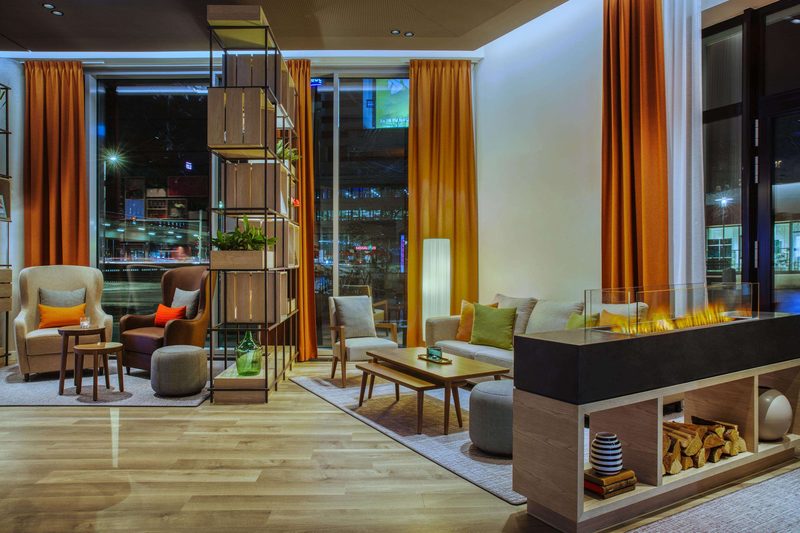
IntercityHotel Hannover Hauptbahnhof Ost
From $143 / night
Check Prices on Trip.com →
★★★
Budget
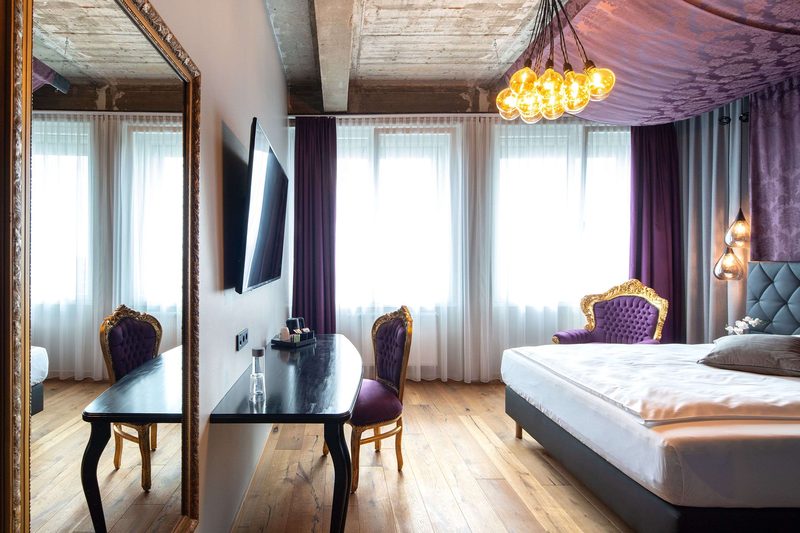
Loftstyle Hotel Hannover, BW Signature Collection
From $90 / night
Check Prices on Trip.com →
Public Holidays in January
Dates that affect opening hours, transport and crowds
Neujahr
Known in English as New Year's Day. Observed nationwide as a public holiday.
Heilige Drei Könige
Known in English as Epiphany. A public holiday in these regions only: DE-BW, DE-BY, DE-ST.
Neujahr
Known in English as New Year's Day. Observed nationwide as a public holiday.
Heilige Drei Könige
Known in English as Epiphany. A public holiday in these regions only: DE-BW, DE-BY, DE-ST.
Packing Checklist
Bookmark this page — your progress is saved between visits
Need the full list with shopping links?
Climate-specific gear, brand recommendations, and what to leave at home.
View Hanovre Packing List →Essential Tips
Insider knowledge and common pitfalls to avoid
Insider Knowledge
Visit the Eilenriede. Hanovre's enormous urban forest covers over 640 hectares (1,580 acres). Locals walk here year-round. It is at its most atmospheric in January. The beech and oak canopy is bare, letting wan winter light reach the forest floor, and on frosty mornings the silence is broken only by woodpeckers and the crunch of frozen leaves underfoot. Enter from the Lister Turm side for the quietest paths. You might encounter joggers and dog walkers but almost no tourists, ever, in any month.
Explore the Linden quarter. Specifically the streets around Limmerstraße and the Küchengarten tram stop. This is where Hanovre goes to eat and drink without pretence. The neighbourhood has a concentration of independent restaurants, Turkish bakeries with fresh Pide coming out of stone ovens, and corner Kneipen where a Herrenhäuser Pils comes in a straight glass and the regulars have been sitting on the same stools for decades. In January, the steamed-up windows and warm yellow light spilling onto the pavement are as close to gemütlich as this sometimes austere city gets.
Catch the Neujahrsschießen if you are visiting in early January. This tradition in some Lower Saxon communities near Hanovre involves firing historical muzzle-loading rifles at midnight and through New Year's Day. It is startlingly loud and entirely local. The smell of black powder hangs in cold air for hours. This does not happen in the city centre but in surrounding villages reachable by S-Bahn.
Use the Stadtbahn. Hanovre's tram network is the fastest and warmest way to move between attractions. Buy a day pass from any ticket machine at the stops, and note that the system runs partly underground in the centre, partly at street level in the outer districts. The underground stations at Kröpcke and Hauptbahnhof are warm waiting areas in themselves, and locals use them as such on bitter days.
Avoid These Mistakes
Do not come specifically for the Herrenhausen Gardens expecting the full experience. In January the Great Garden is a frost-hardened grid of bare hedges and empty fountain basins. The greenhouses and grotto are worthwhile. But if the baroque gardens in bloom are your reason for visiting, come in June or July instead and save yourself the disappointment.
Do not underestimate the damp cold because the thermometer reads only zero. Hanovre's 83 percent January humidity makes 0°C (32°F) feel significantly colder than the same temperature in dry mountain air. Visitors from continental or alpine climates routinely arrive underdressed and spend their first afternoon buying thermal layers at Galeria or the shops along Georgstraße.
Do not schedule too many outdoor activities without accounting for the short daylight. Eight hours of usable light, with the best of it between ten and two, means that a walking tour, a garden visit, and a Maschsee stroll will not all fit into daylight. Pick one outdoor priority per day and schedule indoor alternatives for the hours before and after.
Ready to plan your trip to Hanovre?
Now that you've got the research covered, here's where to go next.
Explore More Activities in Hanovre
Didn't see anything interesting yet?
Browse Viator's full catalog of tours, day trips, food experiences, and private guides in Hanovre.
See All Hanovre Tours on Viator